

Four Companies to Begin Semiconductor Chip Production in India in 2026, Says Ashwini Vaishnaw
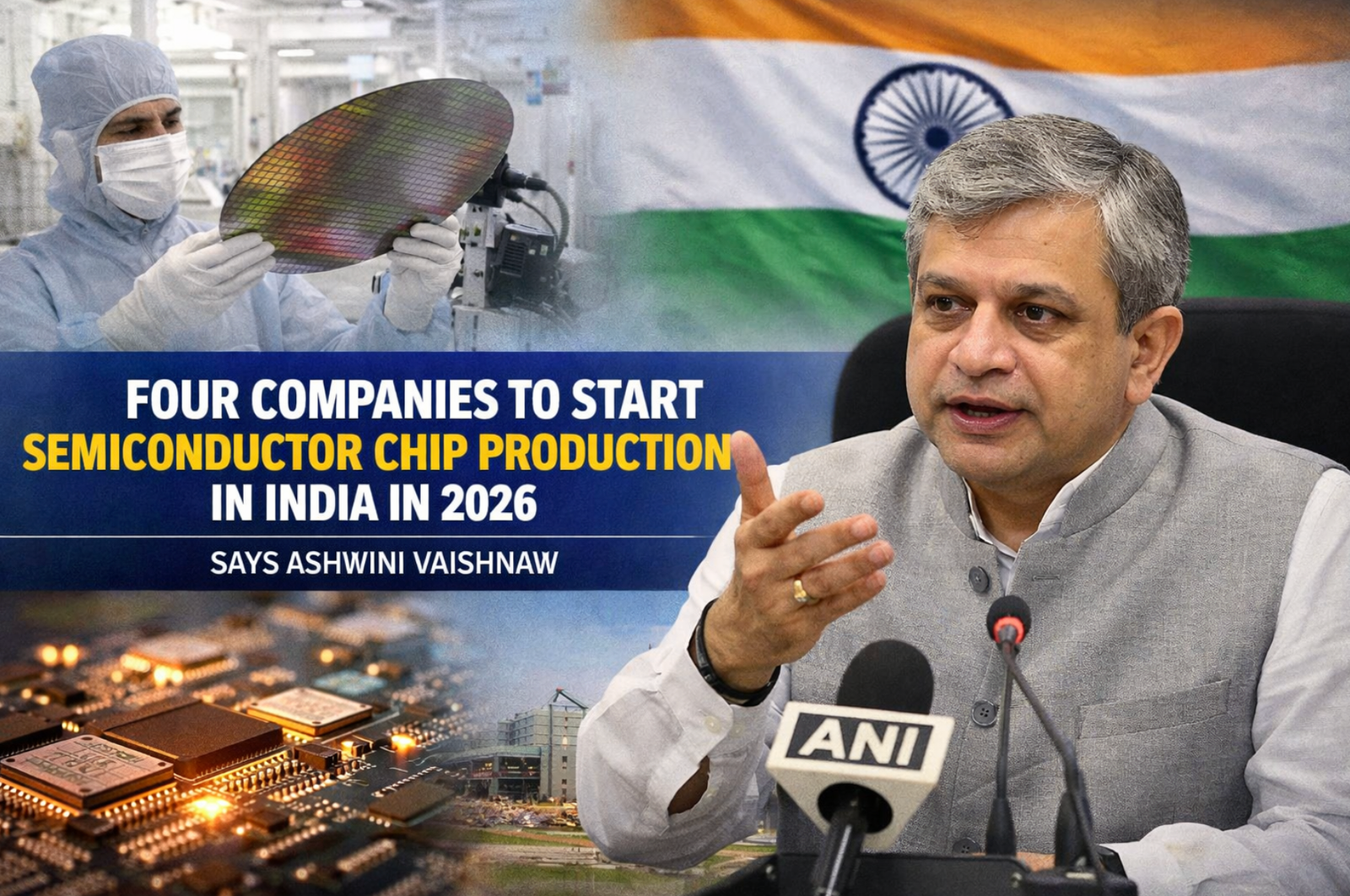
India’s semiconductor ambitions are moving closer to reality. Union Minister Ashwini Vaishnaw has confirmed that four companies will begin producing semiconductor chips in India starting 2026, marking a critical milestone in the country’s journey to build a domestic chip manufacturing ecosystem.
The companies named are Kaynes Technology, Micron Technology, CG Electronics, and Tata Electronics.
A turning point for India’s chip ecosystem
For decades, India has remained dependent on imported semiconductors despite being one of the world’s largest electronics consumption markets. While design talent has always been strong, manufacturing capability has been the missing link.
The announcement signals that India is now transitioning from planning and approvals to actual production timelines.
Each of the four companies represents a different but complementary part of the semiconductor value chain, helping India move beyond assembly toward deeper manufacturing and packaging capabilities.
Who is producing what
Micron Technology is setting up an advanced semiconductor assembly and testing facility, focusing on memory chips used across smartphones, data centers, automotive systems, and AI infrastructure.
Tata Electronics is building fabrication and backend capabilities as part of the Tata Group’s broader push into electronics and high value manufacturing. This includes long term plans to integrate chips into India’s domestic electronics supply chains.
Kaynes Technology and CG Electronics are expected to play key roles in outsourced semiconductor assembly, testing, and electronics manufacturing services, strengthening India’s backend chip ecosystem and enabling scale.
Together, these projects reduce India’s dependence on imports for critical electronics components and improve supply chain resilience.
Why 2026 matters
Semiconductor manufacturing has long gestation cycles. Equipment procurement, clean room construction, talent onboarding, and process validation take years. A 2026 production timeline suggests that groundwork is already well underway.
This also aligns with India’s broader push under its semiconductor and electronics manufacturing programs, which aim to attract global investment while building domestic capability.
Once operational, these facilities are expected to support industries such as consumer electronics, automotive, telecom, defense, data centers, and artificial intelligence.
Strategic importance for India
Semiconductors are no longer just a technology issue. They are a strategic asset.
Domestic chip production strengthens national security, supports manufacturing self reliance, and positions India as an alternative supply base in a world seeking diversification beyond existing hubs.
For Indian MSMEs, startups, and electronics manufacturers, this creates downstream opportunities in packaging materials, tooling, testing equipment, and system integration.
The road ahead
Starting production is only the first step. Long term success will depend on yield quality, cost competitiveness, ecosystem depth, and continuous policy support.
Still, the 2026 milestone marks a shift in narrative.
India is no longer asking whether it can build semiconductors. It is preparing to ship them.
For the Indian manufacturing ecosystem, this could be the beginning of a much larger transformation.
By Team TNN